Join us and unlock access to personalized features, exclusive content, and more. Fill in the details below to get started.
Research to understand hull roughness on our JoRes2 RoRo ferry
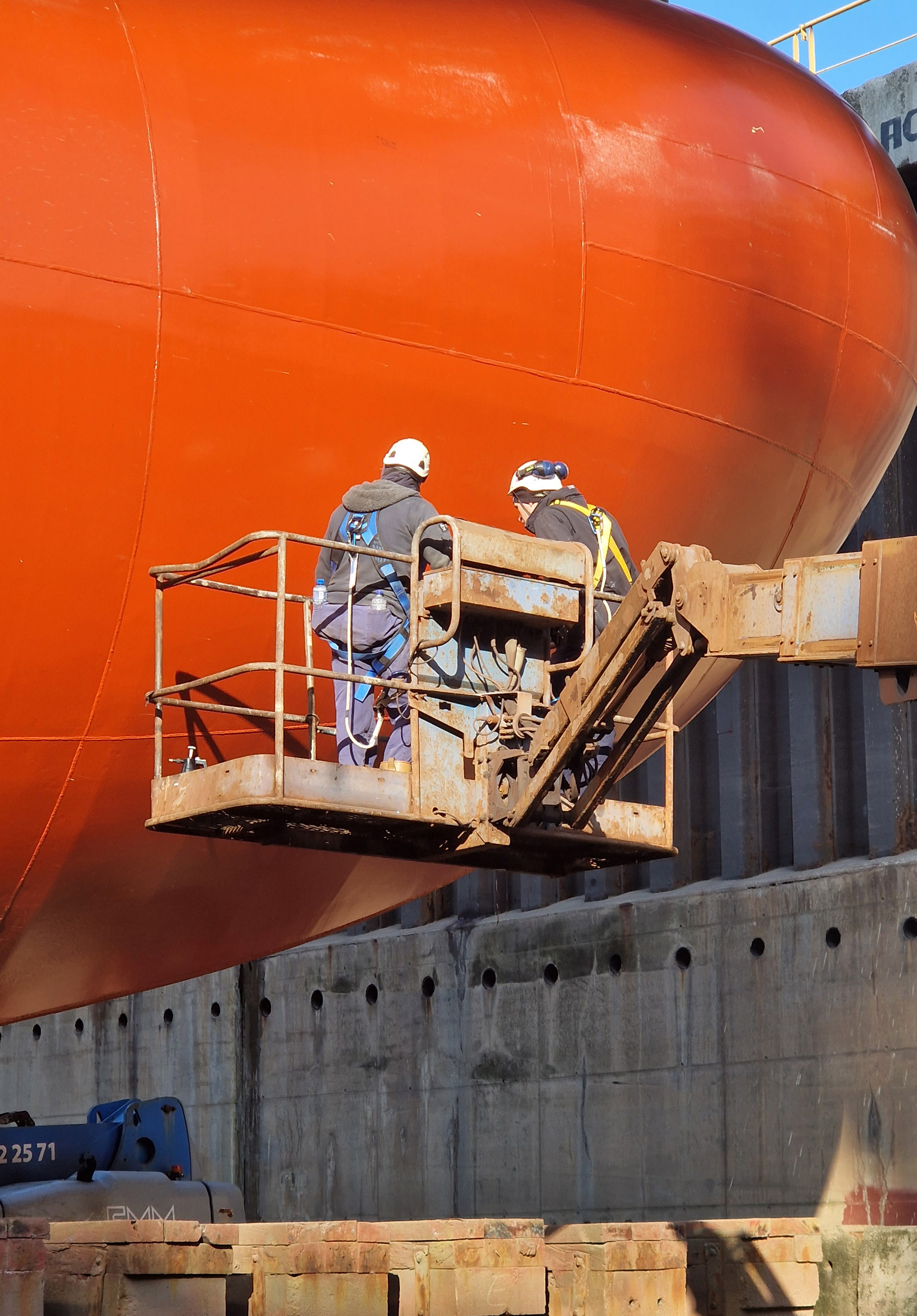
Five years ago, we started a tradition that has now become an essential part of our yearly routine - measuring the hull roughness of our JoRes2 RoRo ferry. This task, which we began in 2021, has allowed us to track and analyse the performance and condition of the ferry’s hull over time.
Every year, our team performs these measurements during the ferry's dry docking, making sure to take readings at the exact locations on the hull surface.
For the first two years, the ferry was coated with antifouling paint. However, in 2023, we switched to a new silicone-based paint, which created new possibilities for our research. After the application of the new paint, we conducted sea trials immediately following the dry docking, giving us valuable insights into the ferry's performance and how the new coating would interact with the water.
Because the vessel is in constant operation, there is no fouling, so we can still see the marks on the paint from 2024, and even 2023.
This ongoing research is crucial for understanding the degradation of the paint and ensuring that we maintain the optimal performance of the ferry. Each year, we learn more about the effects of different coatings and how they can best serve the needs of our vessel.
As we work on compiling the 2025 report, we encourage you to check out all of our previously published reports on this website.
Stay tuned for our upcoming reports, as we continue to track the evolution of the ferry’s hull condition and paint performance!
Other News
How do you know that your Energy Savin
If you perform sea trials on a vessel and, after that, you put her in a dry dock to install an Energ...
See more
What did we learn about sea trials pro
We all know that a vessels actual sea trials measurements are affected by many external factors, suc...
See more

New CFD Workshop on the JoRes2 twin sc
All the previous ship scale validation cases considered under the JoRes project were either single s...
See more